
Adams Kisomose: August 25, 2024
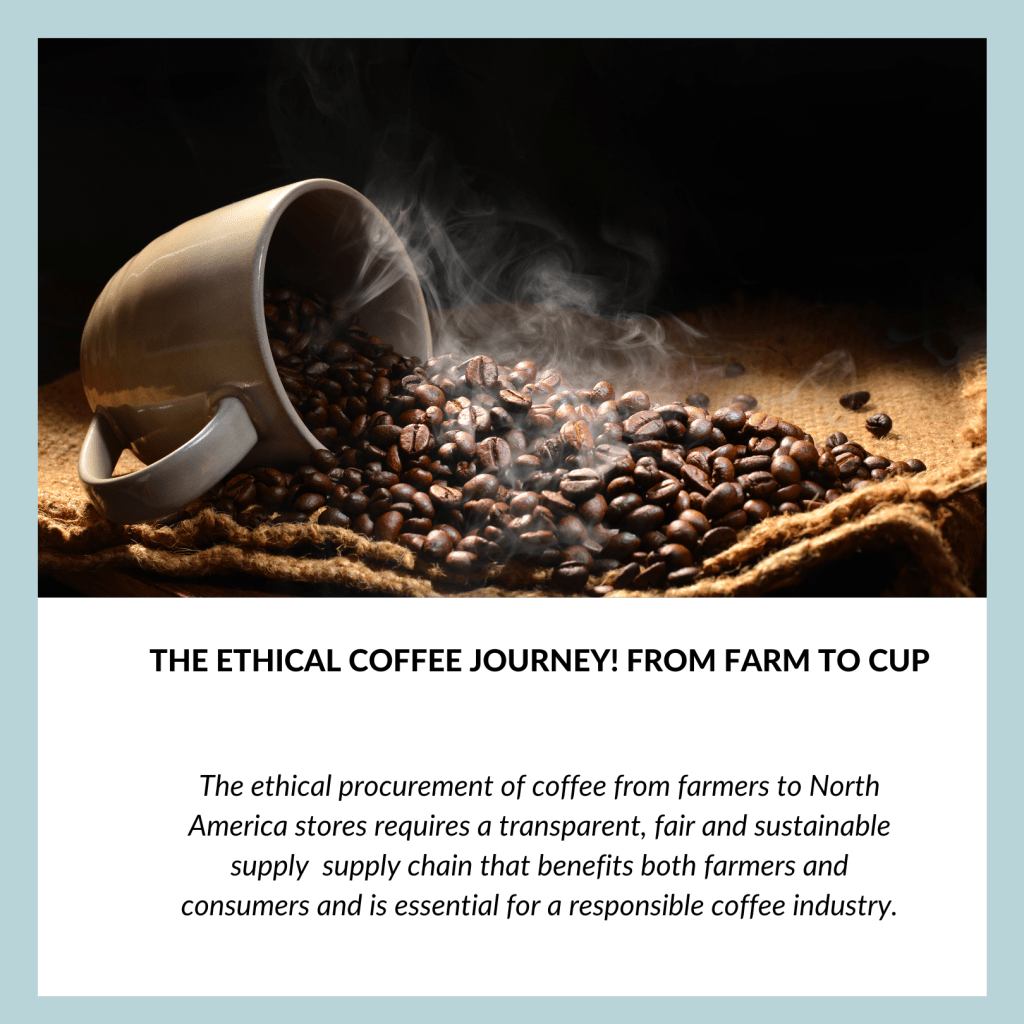
The Ethical Coffee Journey: From Farmers to Cup.
The biggest coffee seller in the United States is Starbucks, with an estimated sales of around 31.6 billion U.S. dollars. At the same time, New England-based Dunkin Donuts comes number two, with 11.9 billion in sales. The largest producer of coffee is Brazil, with an annual production of around 268 million metric tons of coffee. It has held this place for the last 150 years. Brazil’s weather is perfect for growing Arabica and Robusta coffee beans. However, today, we shall focus on the journey of the coffee we consume in the United States from farm to cup. It should be noted that the U.S. drinks more coffee than any other country in the world; apart from the coffee grown in Hawaii, most of it comes from countries like Columbia, Brazil, and Switzerland. Colombia and Brazil are top coffee exporters to the U.S. (USA Facts, 2024)
Ethical Sourcing and Fairtrade Practices in the Coffee Trade:
Fairtrade is a movement that ensures that coffee farmers in developing countries receive fair prices for the products they sell on the international market, along with acceptable social and environmental standards. However, regarding coffee, fairtrade certification guarantees that farmers receive the minimum price for their beans. Hence, this process ensures stability and financial security for farmers. Fairtrade promotes sustainable farming practices by prohibiting child labor and discrimination in the workplace. While ethical sourcing compounds a more comprehensive set of social, environmental, and economic sustainability principles. Ethical sourcing may include direct trade relationships between coffee roasters and farmers, promoting transparency in the coffee procurement process, and promoting investment in community development projects. (Nationwide Coffee, 2024)
The Impact of Fair Trade and Ethical Sourcing:
Fair Trade helps farmers in several ways, and these include:
- It empowers farmers by ensuring fair wages, which translates to income stability. This concept allows farmers to mitigate the vicious cycle of poverty.
- Fair trade practices help farmers protect the environment by adopting sustainable farming practices that preserve natural resources for future generations. Such practices include shading coffee grown in the field and biodiversity conservation methods. This also helps to mitigate the impact of climate change.
- This approach combats trade exploitation, treating farmers with dignity and respect.
- This also helps to build stronger communities as major coffee purchasing powers are expected to give back to the communities by investing in education, healthcare, and infrastructure (roads)
Conclusion:
As a coffee consumer, you are encouraged to make a difference by choosing certified coffee. This is done by locating the Fairtrade logo. This ensures that farmers are treated with dignity and get fair prices for the coffee sold. Always support responsible coffee brands; they usually provide detailed sourcing practices and partnerships with coffee farmers. Always share feedback with coffee companies while expressing interest in fair trade practices, which translates to a positive change in the coffee industry. Therefore, as a coffee enthusiast, you are encouraged to spread awareness of Fair Trade and ethical sourcing practices among friends, family, and community. This helps to ensure that coffee is grown while addressing environmental sustainability, social responsibility, and economic stability.
References:
Conservation International. (2015). Follow Starbucks’ 15-Year Journey to 100% Ethically Sourced Coffee | Conservation International [ Video]. YouTube. https://youtu.be/DaG10sqw9fk
USA Facts. (2024, March 14). Where does America’s Coffee come from?
https://usafacts.org/articles/where-does-americas-coffee-come-from/
Nationwide Coffee. (2023, November 28). Coffee Certification Programs: Decoding labels from Informed Choices.https://www.nationwidecoffee.co.uk/news/coffee-certification-programs-decoding-labels-for-informed-choices
Conservation International. (2015). Follow Starbucks’ 15-Year Journey to 100% Ethically Sourced Coffee | Conservation International [ Video]. YouTube. https://youtu.be/DaG10sqw9fk

 AKISOMS
Leave a reply to Kisoms Majoba Cancel reply